
INTERVIEW: FIRE & DUST MEETS RYAN DRE SINCLAIR
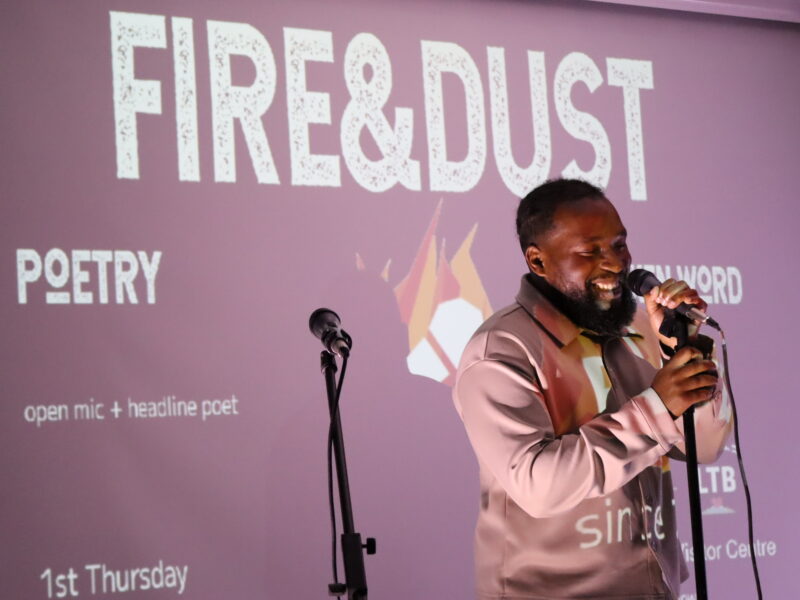
Ryan Dre Sinclair is a spoken word poet, producer, self-published author and playwright from Birmingham (UK). He has been commissioned by and collaborated with organisations such as Apples and Snakes, We Don’t Settle, Heart of England and the Arts Council, as well as appearing on BBC Words First competition. Recently, Ryan has released his debut EP – Writing the Wrongs – and in 2024, he took Generations, his debut spoken word theatre production, to Birmingham’s Crescent Theatre and Nottingham Arts Theatre. He has performed poetry in national and international locations, including Boxpark Wembley, Da Poetry Lounge, Apache Café and with Birmingham 2022 Commonwealth Games Festival. He is also a producer and the founder of Empower Poetry CIC.
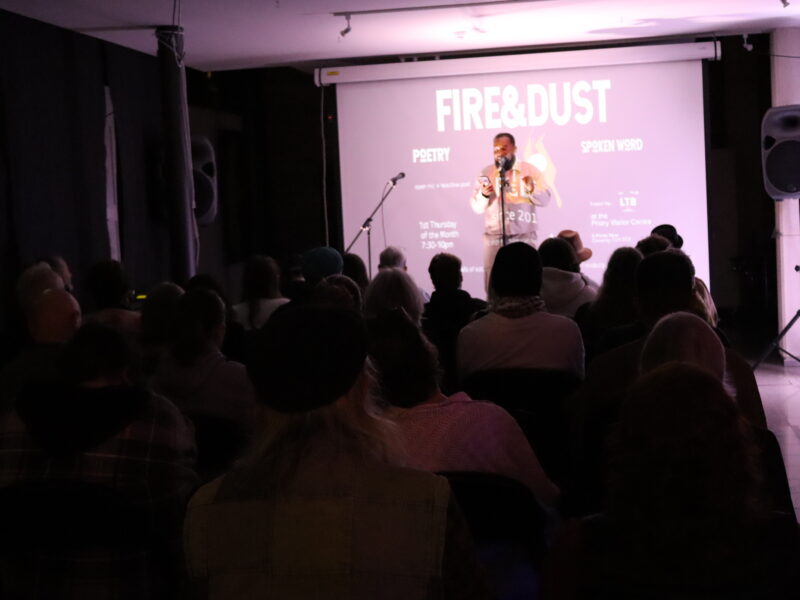
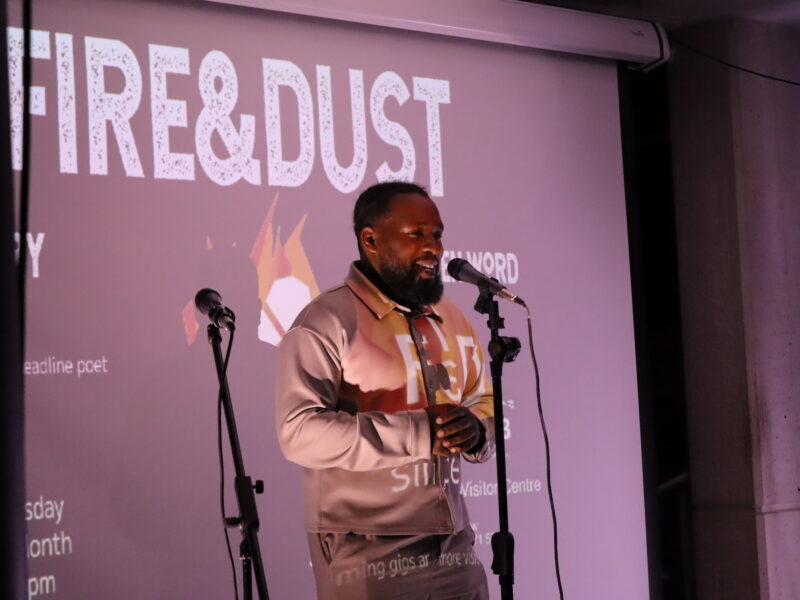
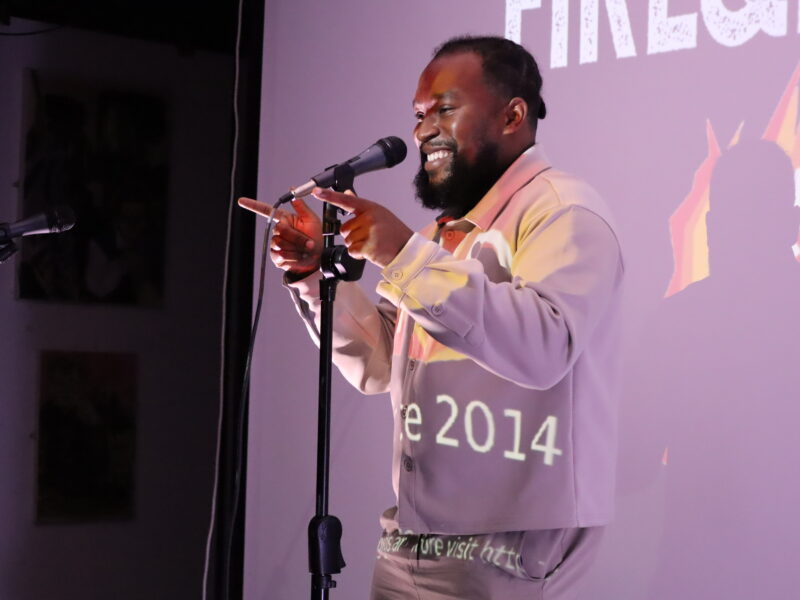
In September 2025, Ryan was the guest headliner at our Fire&Dust poetry night in Coventry, where his set was well-received by the crowd. We caught up with him after the gig, to ask a few questions…
HCE: Tell us a little about your background and journey as a writer so far. What inspired you to start creating and performing poetry?
RDS: So my background has been in Poetry and creative writing, which I began writing in my early teens. Having a form of expression and release was very important to me as a young person and Poetry allowed me to do that.
HCE: Who is your work aimed at – do you have an ideal audience in mind when you’re putting a poem together?
RDS: I would say it used to be that way – now I try to write from two angles: things that reflect life through those around me – whether they’re friends, acquaintances or somebody I’ve met walking by in the street. Along with finding day to day occurrences that are less glamorous yet relatable, as a nice point to start from.
HCE: Who or what would you say are the biggest influences on your own poetry?
RDS: Hip Hop, podcasts, and most importantly – conversations with home.
HCE: It was clear from your Fire & Dust feature that you’re an experienced and compelling performer. You come across as very confident…but do you ever get nervous? Any tips for how to keep calm on the mic and command a room’s attention?
RDS: Thank you! I often do get nervous but I see it as a sign that I care about what I’m doing. I often try to enjoy the experience and – where possible, bring the audience with me, which helps especially when you want to stay present and share.
HCE: Would you say there are themes or motifs that you tend to gravitate to in your writing?
RDS: Definitely. I would say health (both mental and physical), culture, oddity and resilience.
HCE: What elements, in your opinion, do most well-written poems have in common?
RDS: A sense of belonging for the reader/viewer. A journey for them to go on, and looking at the theme or subject matter differently before and after the performance
HCE: Your headline set featured a lot of entertaining wordplay. For instance, there was a skilful bar where ‘lost here’ had the dual meaning ‘lost hair’ and was linked to a remark about menopause. Do the witty puns come to you first and inspire the whole piece, or do you start with a topic and work them in later on? Please talk us through your writing process a little.
RDS: Ha thank you! I often find nuances and puns through conversations and every so often I’ll jot it down and come back to it. Or if a subject matter is weighing heavy on me I will jot down all the key/important things I want to touch on or include in some capacity so I can work them into the piece of writing. But I enjoy being flexible and not necessarily seeking to be witty or funny. I also enjoy engaging with different literature and oracy. Prose, battle rap, spoken word, podcasts, etc., etc.
HCE: Did you enjoy the experience of writing Generations and having it produced, and what is it about theatre plays that attracted you as a vehicle for your poetry?
RDS: I really enjoyed it and found it testing. I wanted to put my art in a new format, with different audiences and critique. I have always loved the abstract nature of Theatre and never quite understood how it was so effective and brilliant at the same time. So for me, I wanted to push my writing into a new space and for it to be received by new audiences.
HCE: You had some cool stuff for sale in the interval at Fire&Dust. Can you tell our readers a little about the writing prompts for well-being and your two-part animation book, A Birmingham Story?
RDS: Absolutely. So the writing prompts were A-Z cards with a positive affirmation word for each letter. Often as writers and humans in general – we are looking for ways to connect. These act as something that is good for wellbeing but also as a prompt to begin writing if ever stuck with writers’ block or lack of motivation. The two part animation book is something I wrote in 2017-2018 as I wanted to explore different emotions through animated characters that go on a journey through life. These characters embody emotions that I experienced whilst at Uni, and I wanted to explore them through a storybook. I have used both in schools and working with young people, which have been effective.
HCE: In your opinion, what more should arts communities in the UK be doing to support artists, in particular writers of colour, to make sure their voices are platformed and heard?
RDS: I think more accessibility for things, such as funding as well as development programs that aren’t age capped. I think a lot of Artists feel once they pass 30, many schemes are not accessible any longer which is a shame. For writers of colour – I would like to see more publishing houses, as they seem to be few and far between. Particularly if some of the writing is in creole, or non English. It’s important there is enough representation for those things.
HCE: The energy in the room during your Fire&Dust set was relaxed and friendly. You frequently interacted with the audience, asking us to raise our hands, show our screen time to the person next to us, and sing along to the final poem with you. Do you notice listeners engaging more with your message, when they get to actively participate in the performance?
RDS: Definitely! When I was at Uni and in work meetings – I found it disinteresting and boring when being lectured or spoken to for an extended period of time. It’s kind of like going on a car or train journey with somebody and not speaking to them. Interaction makes it that much more fun and people feel they are a part of something and connected, which ultimately as Humans is one of our needs.
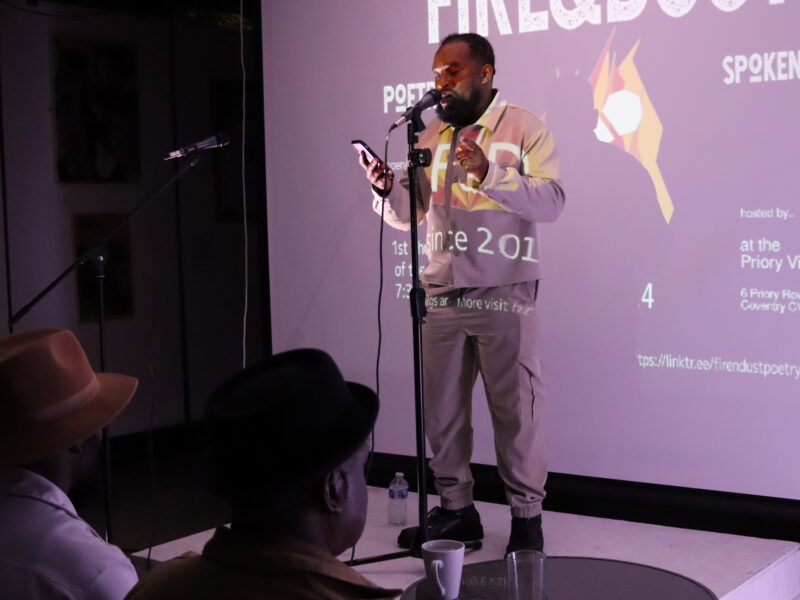
HCE: Some of your spoken word explores difficult life experiences and socio-political topics in a raw and honest way. One example would be ‘Shirley Sacrifice’, where you really embodied the character’s first-person perspective. Is this an emotionally draining thing to do? What is the top piece of advice you would give other poets for tackling heavy/personal topics in their writing?
RDS: It can be – it’s not a poem or subject I visit very often due to the nature, but I wanted to give a rollercoaster range of Pieces which explored my range. But words are so powerful, so it is near impossible not to feel emotionally connected. I would say to writers to give themselves enough space away from the writing. As it’s easy to embody it to the point of no return.
HCE: In your experience, is Birmingham a good city to be a writer? Are there thriving literary scenes that welcome and nurture emerging talent?
RDS: Yes – I think it’s the hub for writing in the country. With many events and organisations that are there to build the scene up professionally.
HCE: What’s next on the horizon for you? Are you already working on a new play or album, and are you booked for upcoming performances?
RDS: Both! I’m working on a 1-man theatre show currently, which will be (fingers crossed) going on tour in 2026. I am also working as part of the team for Birmingham Poetry Network, which is designed to support the local scene through resource, infrastructure, and wrap around support. Empower Poetry shows will be entering a new era with somebody else running the events. I will still be involved but more operationally than on the ground due to having too much on my hands in the foreseeable.
HCE: What’s the best way for people to keep connected with you and your work, or contact you for bookings?
‘No Photos’ is Ryan’s one-man spoken word show that explores social anxiety, self-image, and visibility through the lens of a man who never wants to be in the picture. Keep an eye on his social media for news about performances and tickets. The show will be on at Camden Theatre on Tues 28th April 2026.